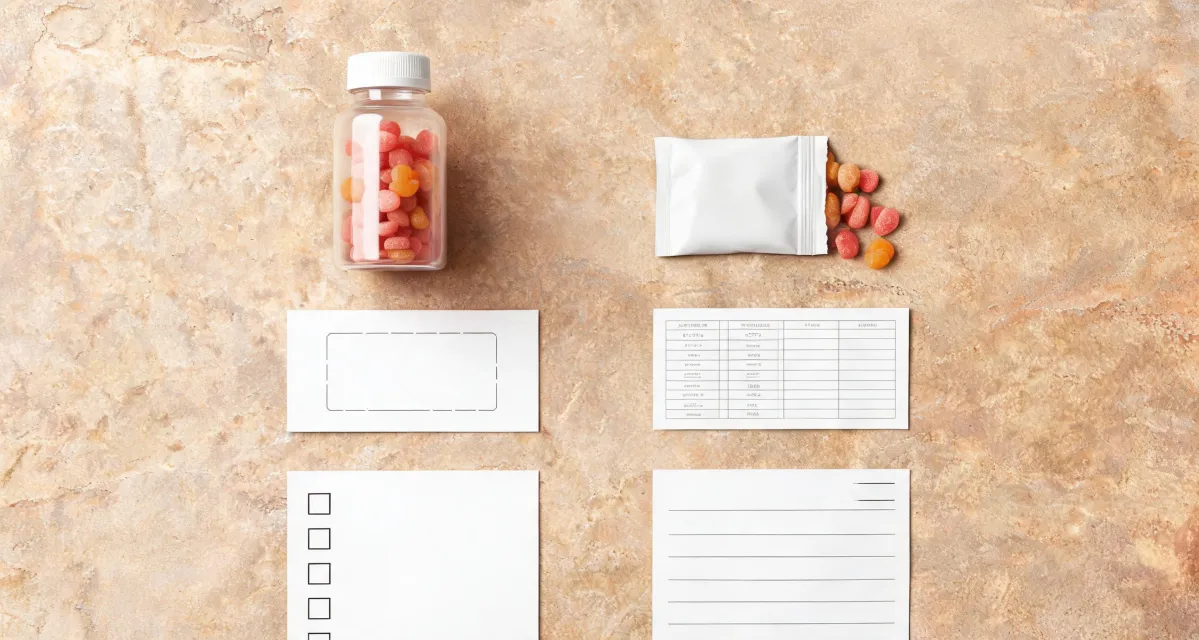
A vitamin D gummy is one more place vitamin D enters your day, and the number worth counting is how many other products on your shelf also list it. The gummy is rarely the problem; the second and third labeled source sitting beside it is.
That distinction matters because gummies are sold as a small, candy-like addition, and the framing makes it easy to stop counting after the first bottle. The same nutrient shows up across several kinds of supplement, so a household can hold three or four items that each contribute it without anyone deciding to double up.
What a Vitamin D Gummy Is, and What It Adds
Strip the shape away and a vitamin D gummy is a supplement format, nothing more. The vitamin D inside supplements comes in two forms, D2 and D3, and the gummy is simply one vehicle for delivering one of them.
The word that matters here is adds. Vitamin D is available in supplements, and it is also included in many multivitamins. A gummy doesn't occupy its own lane; it is another entrance to the same nutrient, which is why buying it changes what your total intake looks like even when each individual purchase looked sensible on its own.
Nothing supplied here includes a gummy-specific absorption trial or a head-to-head clinical comparison, so there is no basis for saying a gummy delivers vitamin D better or worse than a tablet or a softgel. What can be said is narrower and still useful: it is a source, and sources are countable.
Where the Same Vitamin D Repeats at Home
A gummy is a single-purpose format: you buy it for vitamin D. A multivitamin is a bundled format, built to cover many nutrients at once, and vitamin D is commonly one of them. That difference in packaging is exactly where duplication hides. You did not pour two doses into one bottle; you bought two bottles that each list the same item.
The check takes a few minutes at the kitchen counter. Turn every bottle and box to its supplement facts panel, ignore the front-label claims, and look for vitamin D on that panel alone. Then count how many items in the house answer yes.
No current ingredient panel for a specific product is part of this, so no per-serving figure is quoted here. The action stands on its own: the count is the information you need, and it comes off your own shelf rather than off a product page.
Why a Stacked Intake Matters Before You Feel Anything
Most cases of vitamin D toxicity happen when someone overuses vitamin D supplements. Very high levels of vitamin D can damage the kidneys, and they raise the level of calcium in your blood; high blood calcium can cause confusion, kidney failure, and irregular heartbeat.
Read those two statements for what they are. They describe the far end of intake, not a verdict on gummies, and they hand you neither a threshold nor a probability. What they establish is direction: when intake climbs, the consequences are not minor, and the organ most often named is the kidney.
Duplication is a shelf behavior, built one reasonable purchase at a time, and it accumulates quietly. Waiting for a symptom to prompt a count means the count arrives after the decision that mattered.
The Obvious Objection That It's Only a Gummy
The obvious objection is that a gummy comes out of the treats aisle, so it can hardly be the thing that pushes intake up. The response is that the format is what relaxes you, not the chemistry. Vitamin D in a chewable base is still vitamin D, and the harm on record tracks how much is taken over time, not the shape it arrives in; soft, hard, or chewable is not the variable that separates a safe amount from too much.
There is a version of this where the objection wins outright, and it should be said plainly. If the gummy is the only product in your house listing vitamin D, and you use it as the label directs, there is no duplication to find. Nothing here stretches to that household.
Imagine a counter holding a gummy bottle, a multivitamin, and one more product whose panel includes vitamin D. Three entrances, each individually unremarkable, each labeled honestly. The problem is the number three, not any one of the three.
Reading Label Doses Without Treating One as Your Ceiling
The number printed on a supplement label is the amount in a serving of that product. It is not a personal limit, and it is not a permit for the day's total. Guidance for dietary supplements asks you to tell your health care provider about any supplements you use, and not to take a bigger dose than the label recommends.
Both halves of that instruction point the same way. The label number governs one product's serving; the conversation with a clinician governs the whole picture, including everything else you are taking alongside it.
So the useful comparison is horizontal rather than vertical. Instead of staring at one bottle's figure and deciding it looks small, line the products up and read across: from how many of these am I taking a serving on a given day?
No individualized dosing assessment exists in what's here, and no daily upper limit is given, because neither can be derived from general nutrient information. That question belongs with a clinician who can see the full list.
A Skeptic Asks Whether Toxicity Is Even Realistic Here
A skeptic would say toxicity belongs to people swallowing handfuls of pills, not to someone having a gummy with coffee. That is a fair challenge, and the honest reply is that the record describes no gummy-specific path to toxicity. It documents harm at overuse and at very high intake, not at the shape of the pill, and it supplies no probability for someone having a gummy.
Which leaves an answer that is narrow but real. A single bottle used as labeled carries no evidence marking anyone as high-risk. What lifts the risk is duplication you did not notice, combined with reading a per-serving figure as permission for everything you take.
The doubt that tends to survive all of this is the feeling of being fine right now, and whether any of it still applies. It does, in one narrow way: feeling well tells you nothing about how many sources are sitting on the counter. Write down every product in the house whose panel lists vitamin D, and take that list to your next appointment. A single label figure is not a verdict on your total; that total is only visible once every bottle is on the list.
